It was the small ute parked precariously on the side of the road
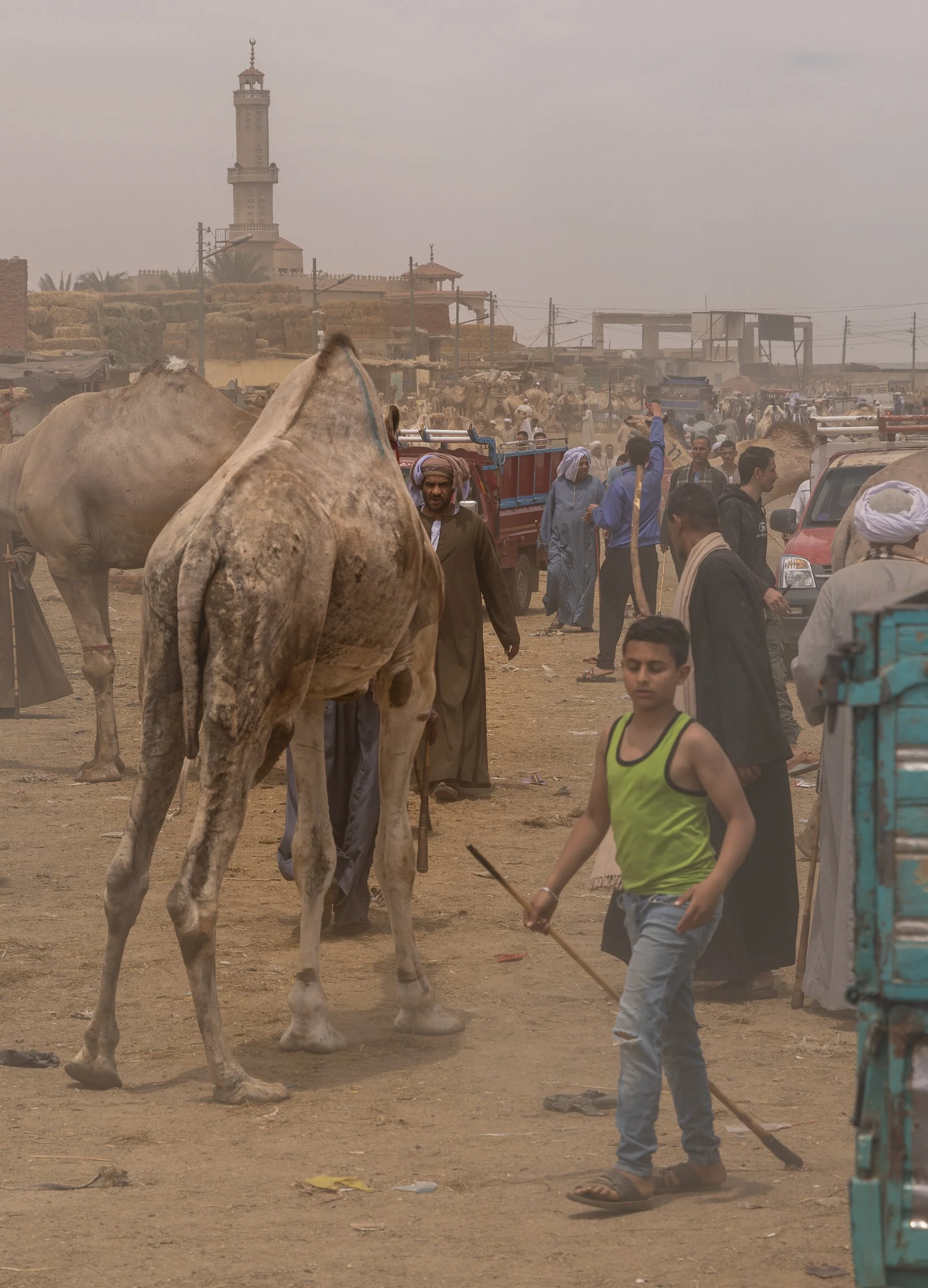
with seven men attempting to haul a grumpy camel onto the deck of it - hooves dug firmly into the dust, men with raised sticks and voices - that alerted me to being near Africa’s largest camel trading market, a supermarket of camels so to speak; the Souq-el Gamaal.
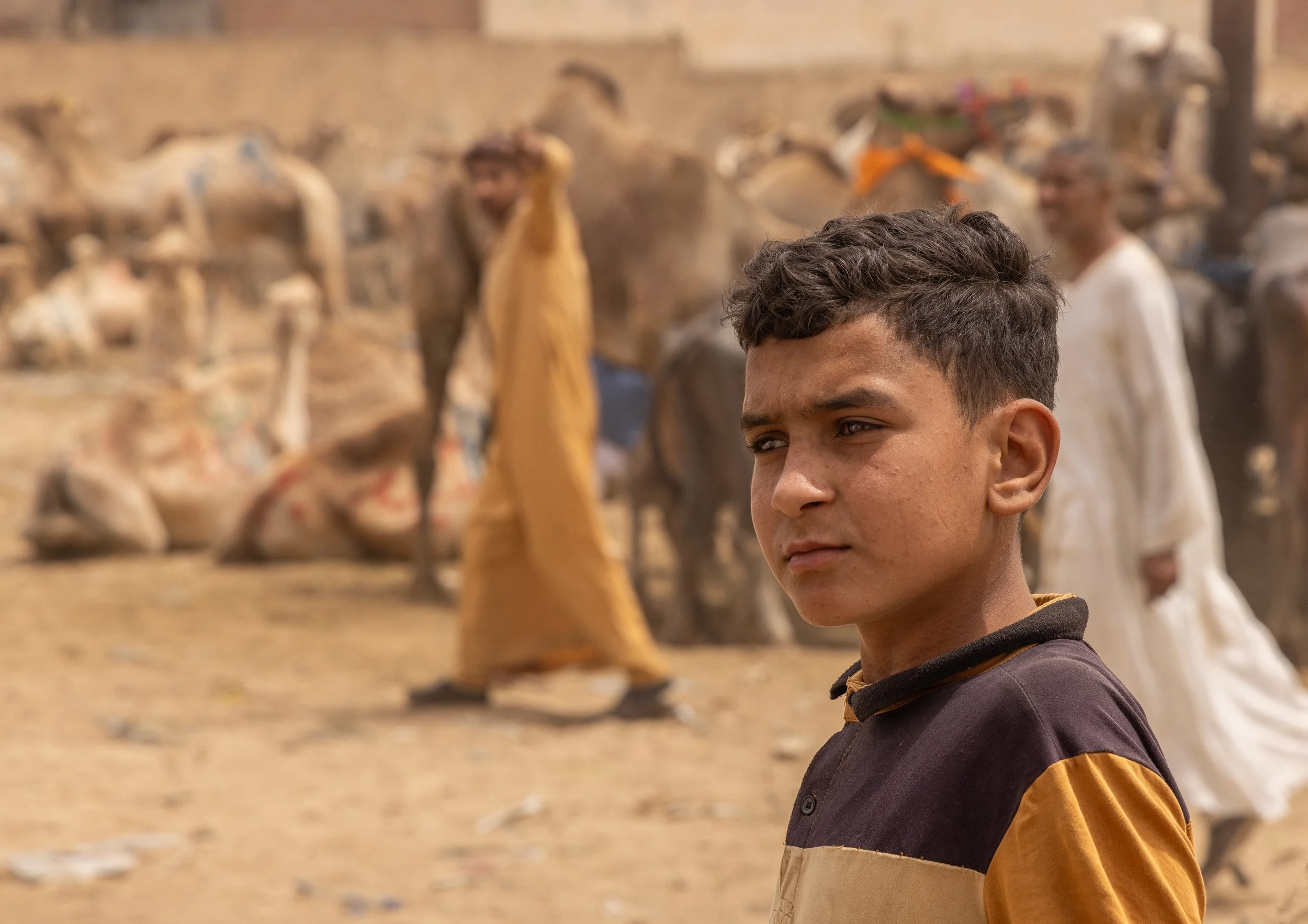
Located some 35 km Northwest of Cairo’s sprawl, in the village of Birqash, the market operates every Friday morning, bringing thousands of dromedary camels from as far as Sudan, in order to be traded.
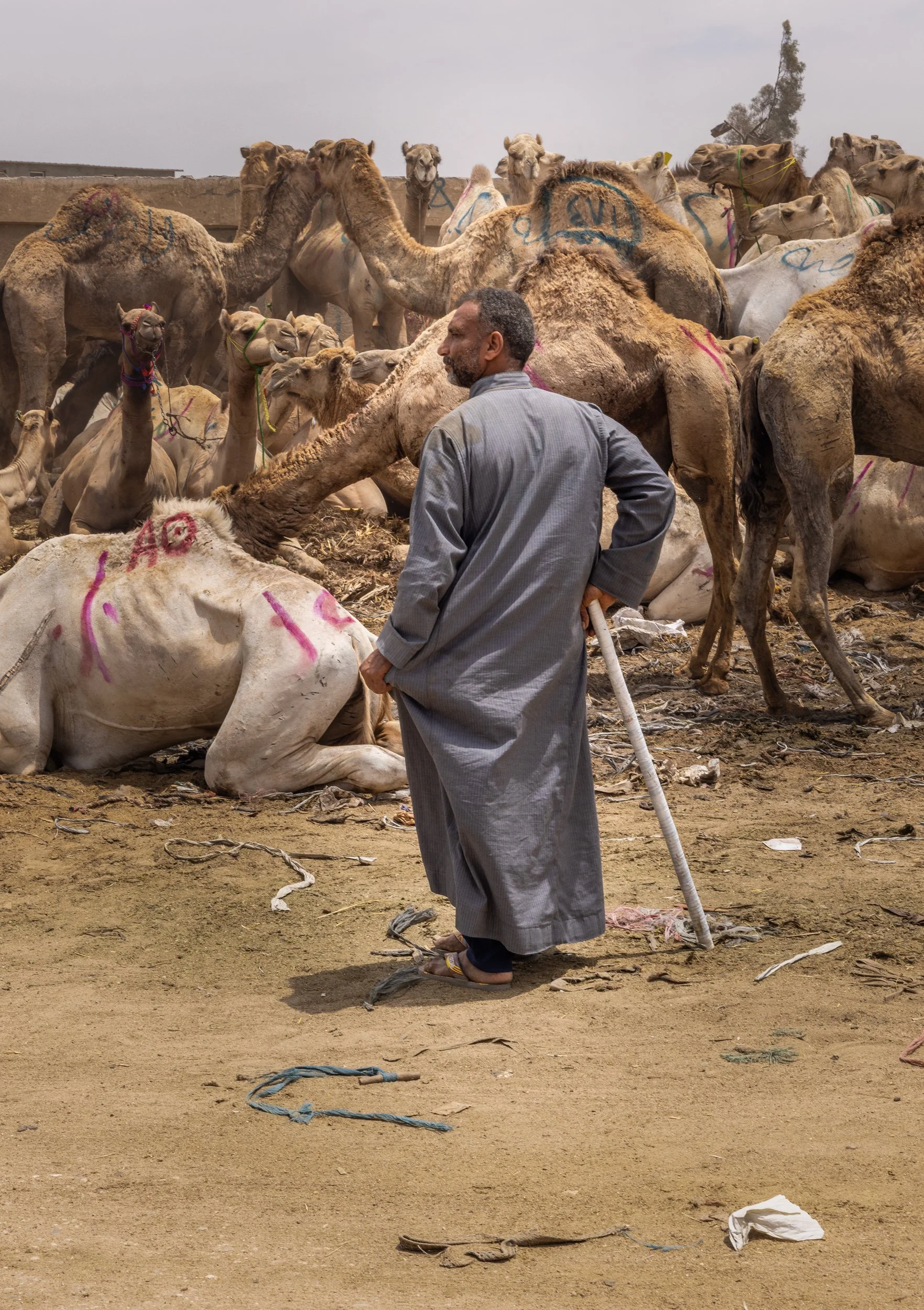
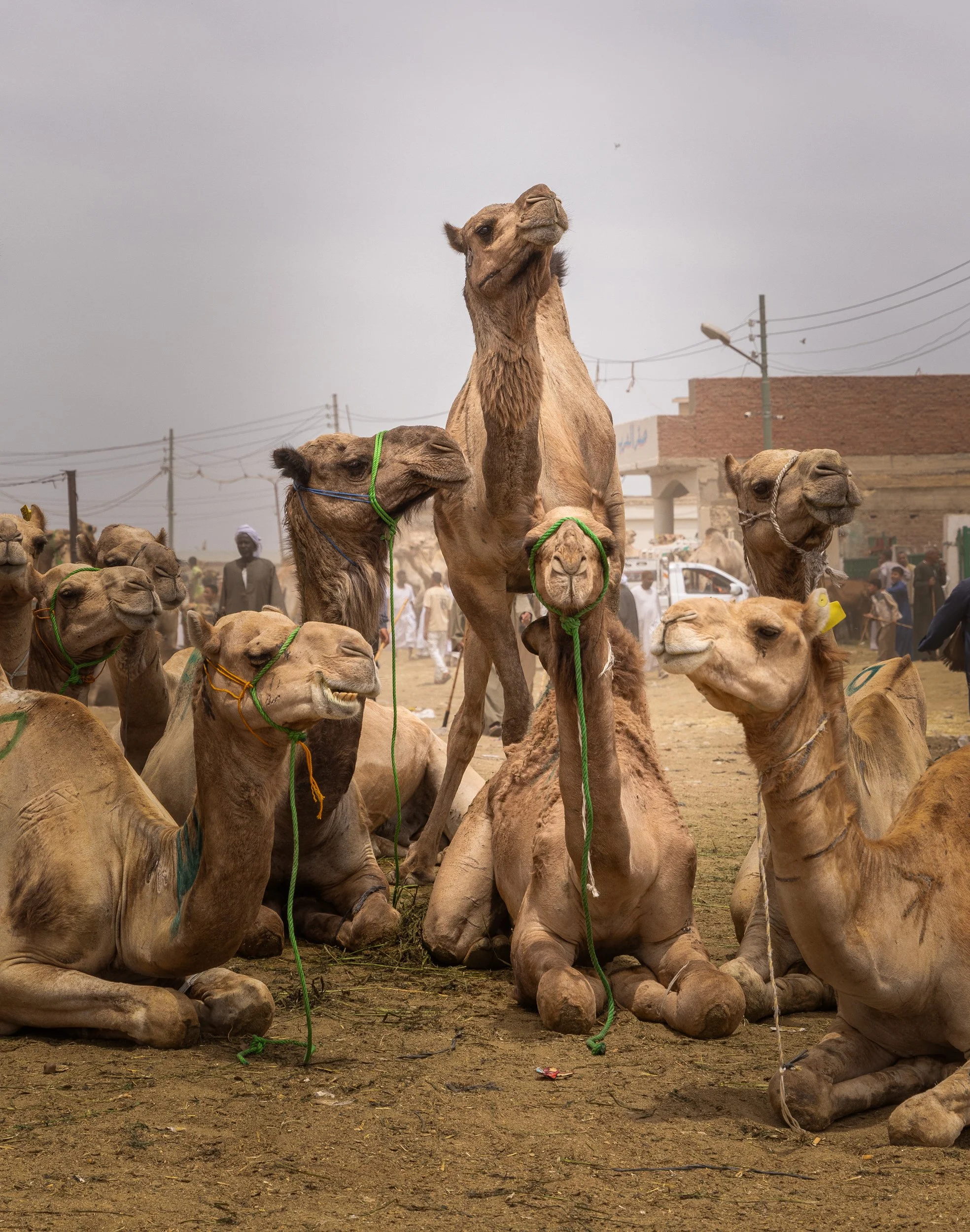
Camels are hot property in Africa, with some fetching and much as 40,000 EGP - a royal sum for many subsistence farmers. The camels are bought and sold mainly for the camel meat industry; many are purchased to service the lucrative tourism industry in Egypt such as in the areas of Giza pyramids, Luxor and Aswan, where they are used for camel rides and photography.
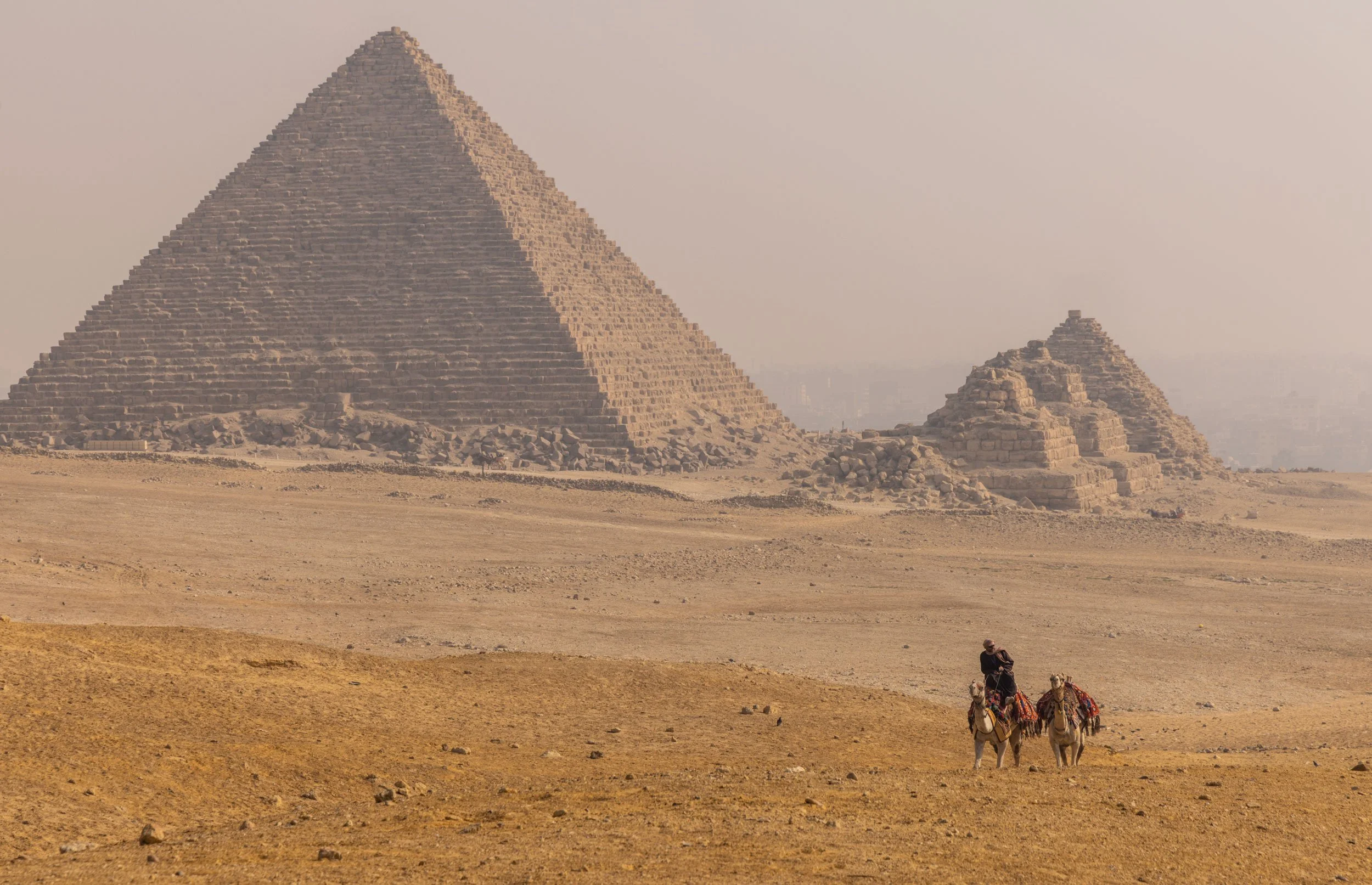
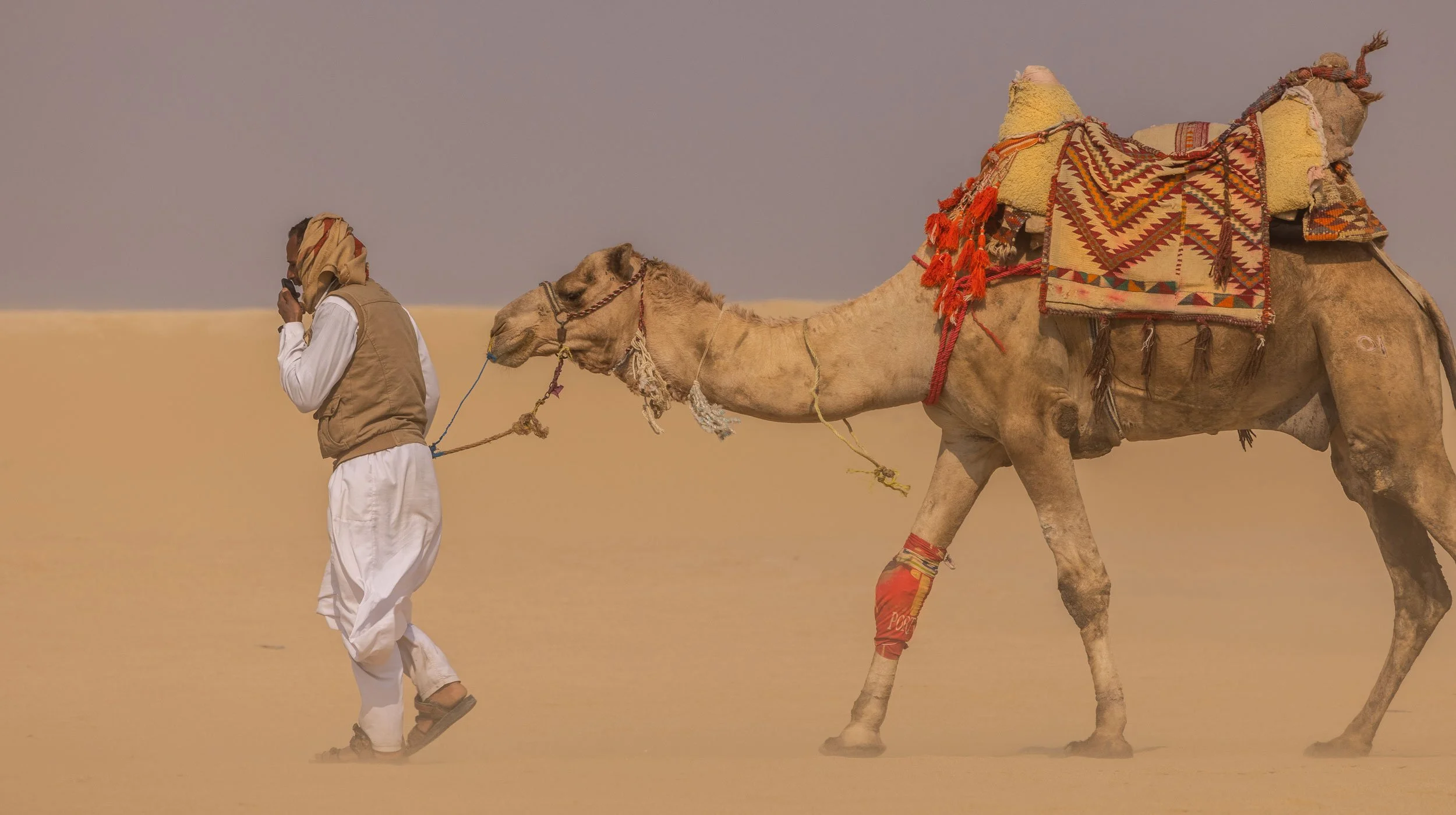
A camel driver with the famed pyramids of Giza and a sprawl of Cairo behind.
The single-humped dromedary camel is particularly favoured for its superior meat, and the majority of theses camels are herded from Sudan in the south and Somalia, a journey of over 1200 km, which they took (for some by literally being walked) packed into the back of a truck, yoked together, with legs bound, by ropes, up into Egypt.
An exhausting and arduous journey to ultimately meet their fate, they cover the distance with little chance to rest, little water and barely any food.
I visited the market in the weeks leading up to Eid Al Adha, meaning it was especially bustling as traders sought the best camels for sacrifice.
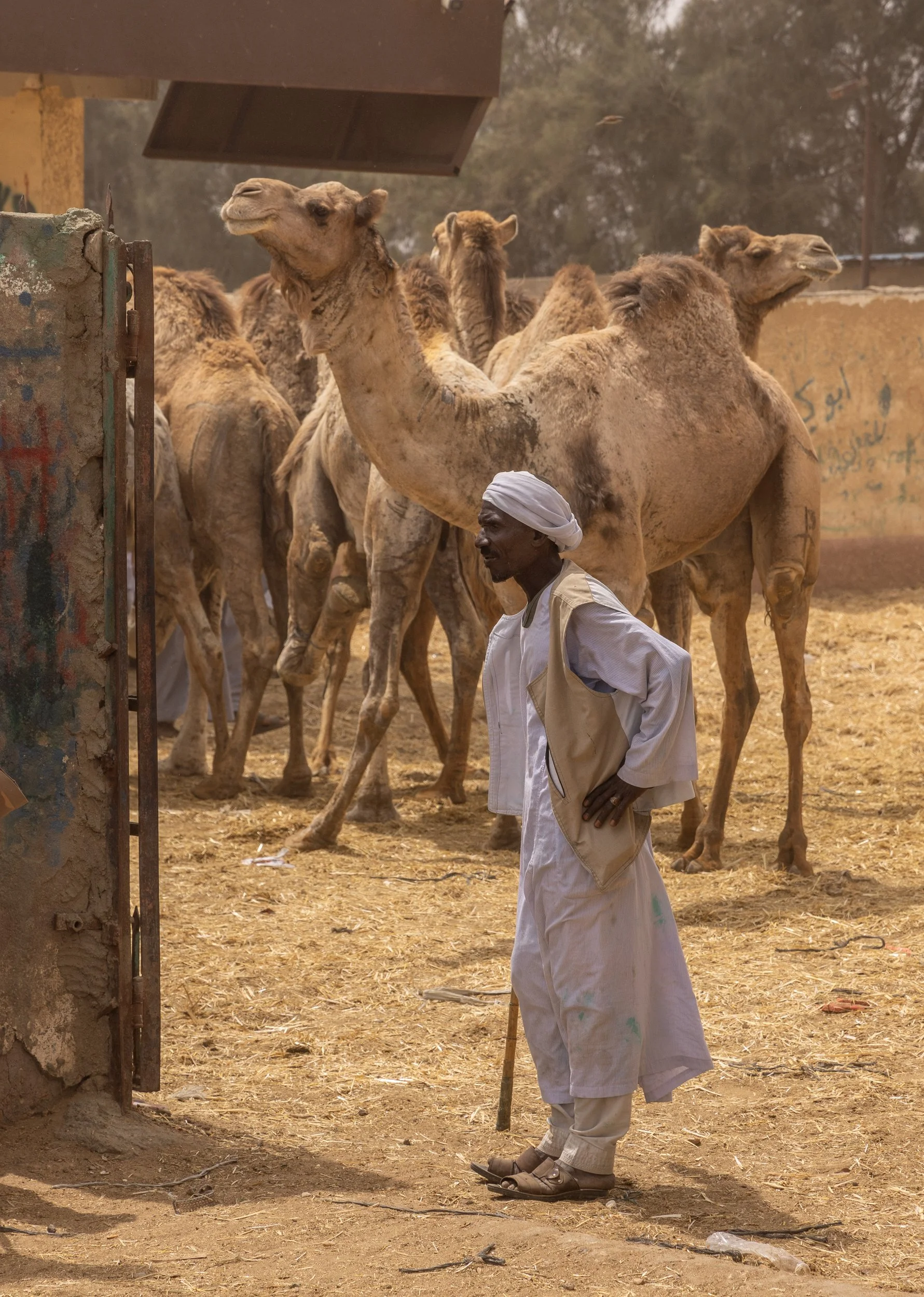
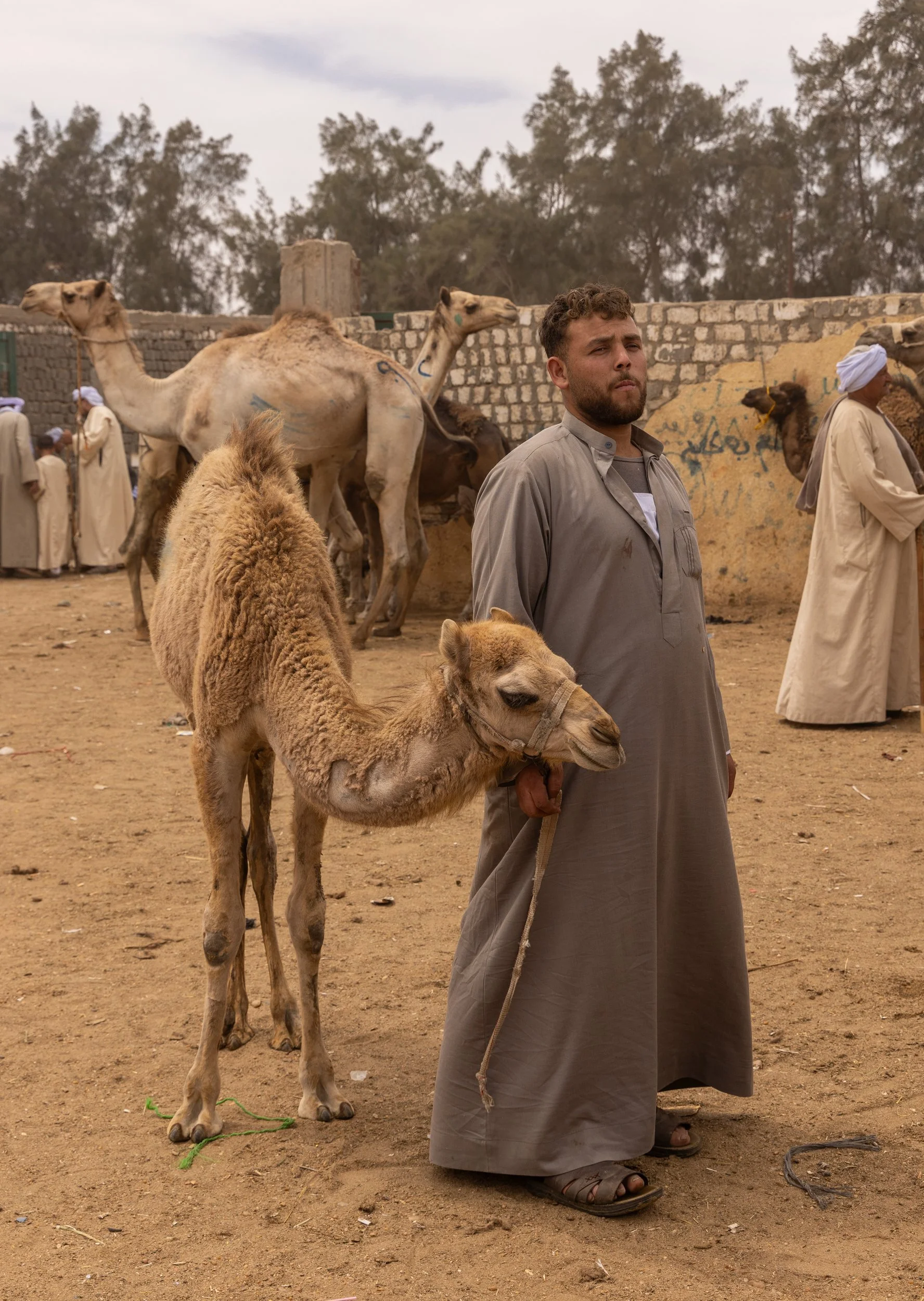
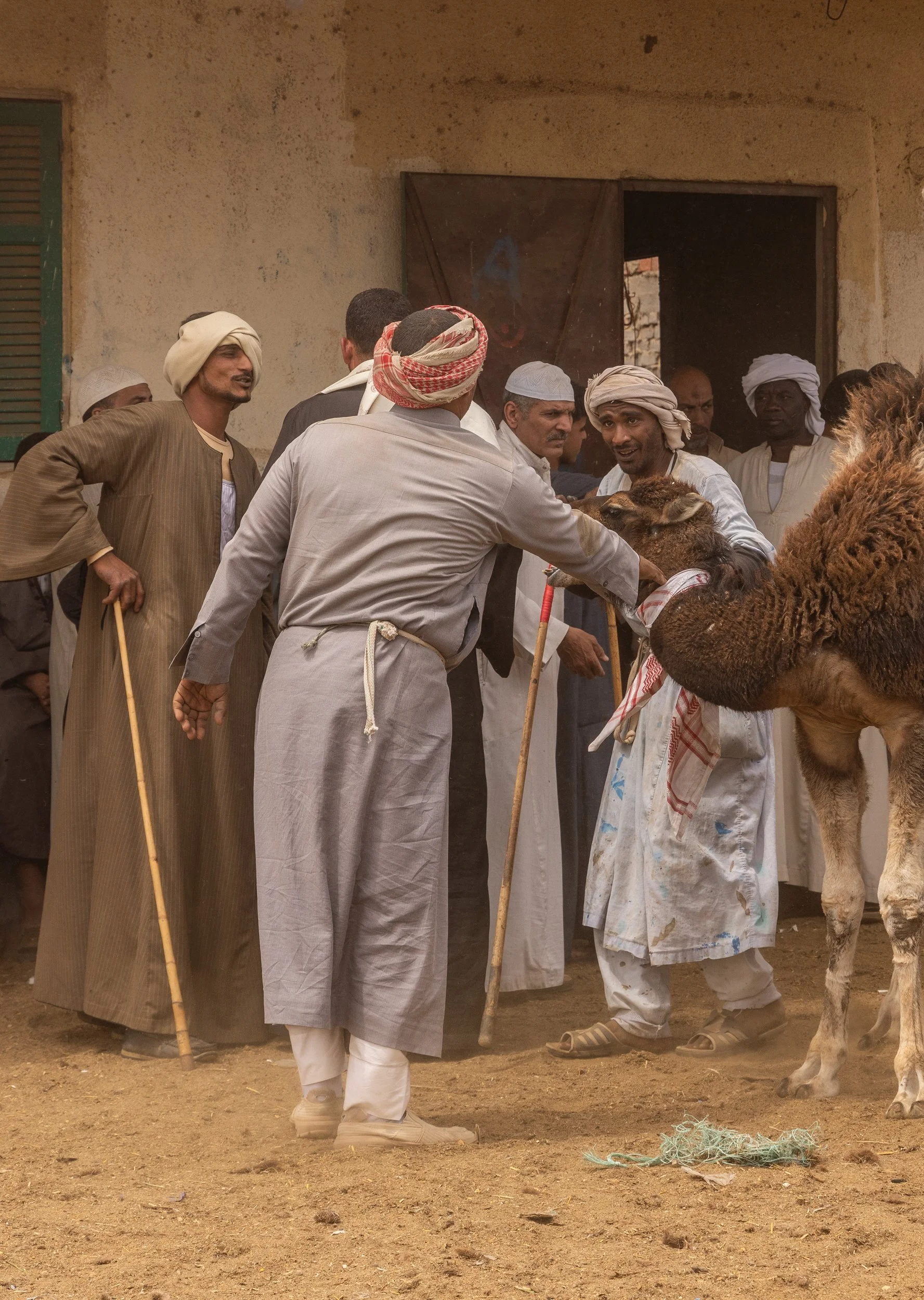
Some camels get ‘extra time’ - being too lean for food, they are traded to be fattened until they are ready to be butchered; and I certainly did see some scarely skeletal camels.
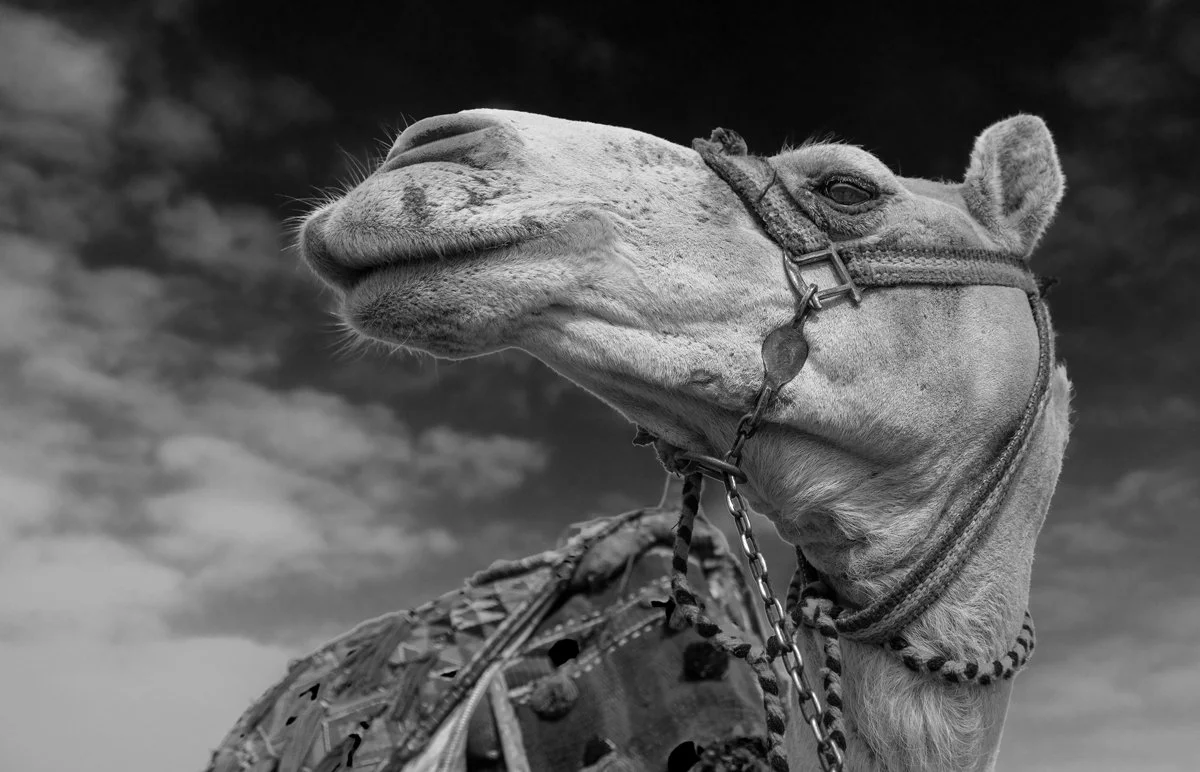
Camels are used widely in the touriusm industry in Egypt.
I arrived with friends and a driver to the village, in May. The sun was already sharp in the sky, and the dust was flying, leaving a permanent haze in the air. I wondered what the heck I was doing there, as soon as I witnessed that scene of men pulling and shoving a stubborn (and probably terrified) camel onto that small truck.
They tie a front leg up - so the camels are restrained and hop about clumsily. They then are resigned to submitting to the sit - something they find awkward to do. It was not unusual to see a small ute packed with three to four small camels, long necks peering out over the sides, on a Cairo motorway - but here in this rural village, camels well outnumbered humans.
If only they were smart enough to realise that in reality they could have the upper hand - but they succumbed to the beatings, the whippings and poking.
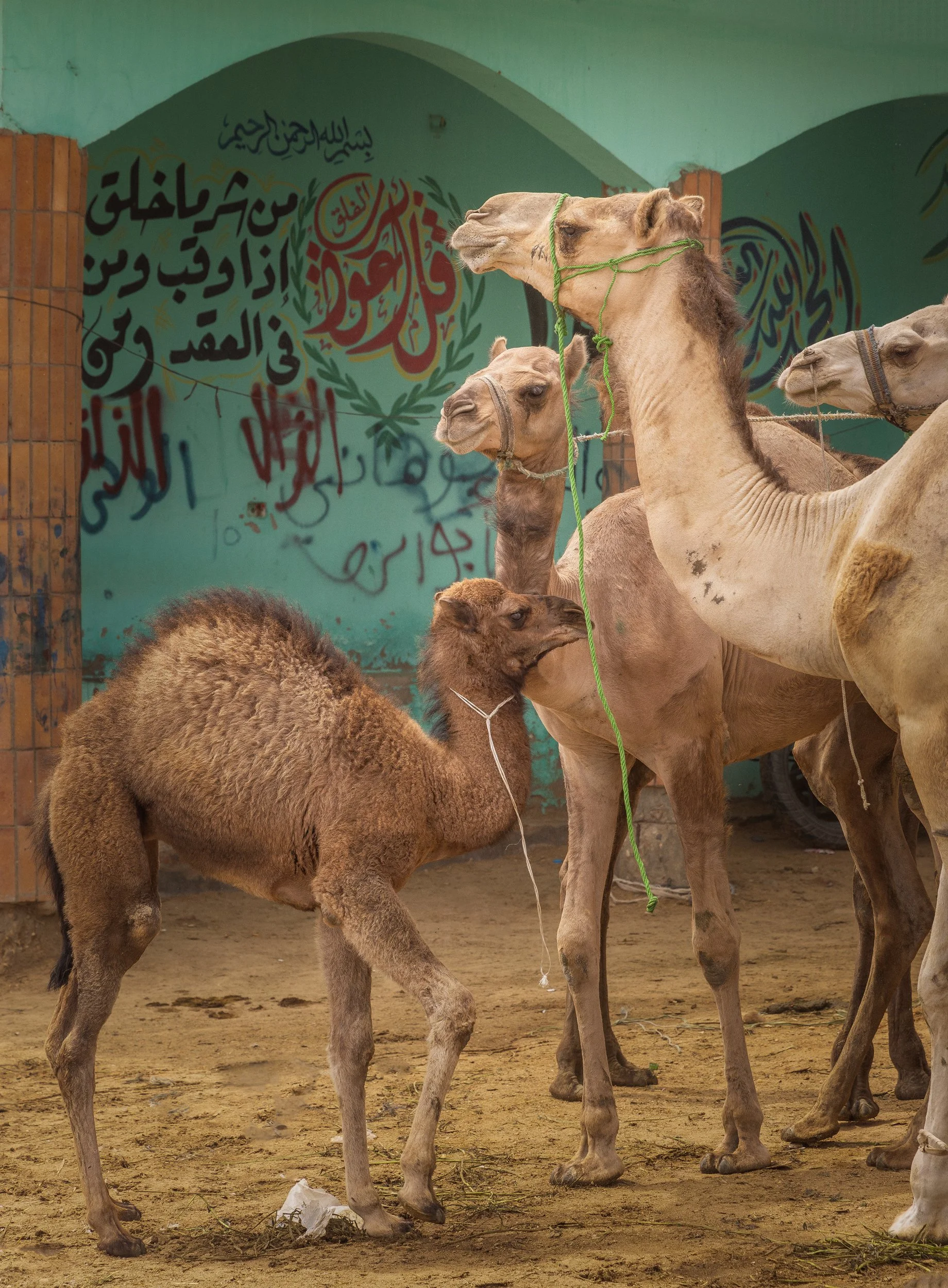
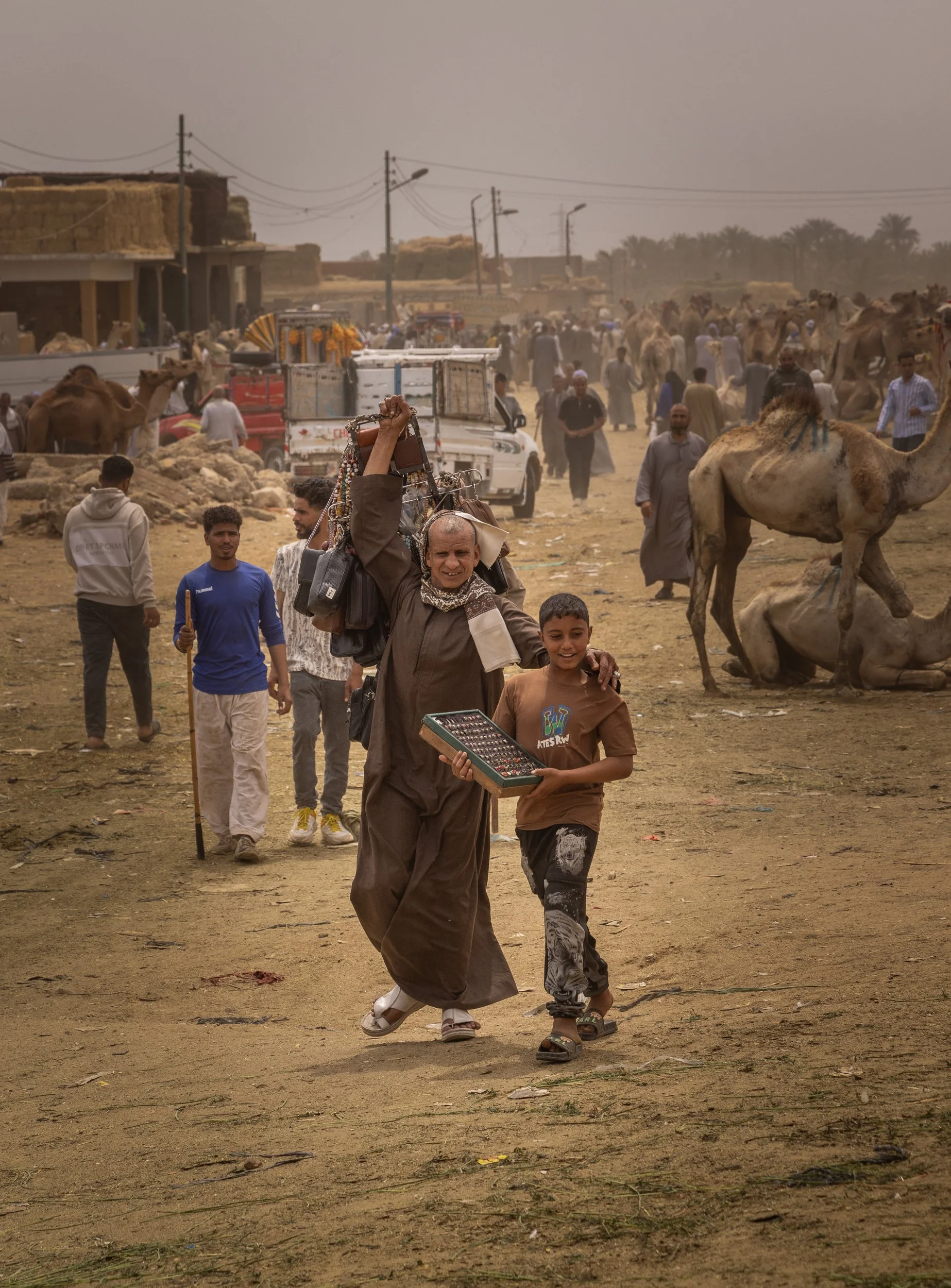
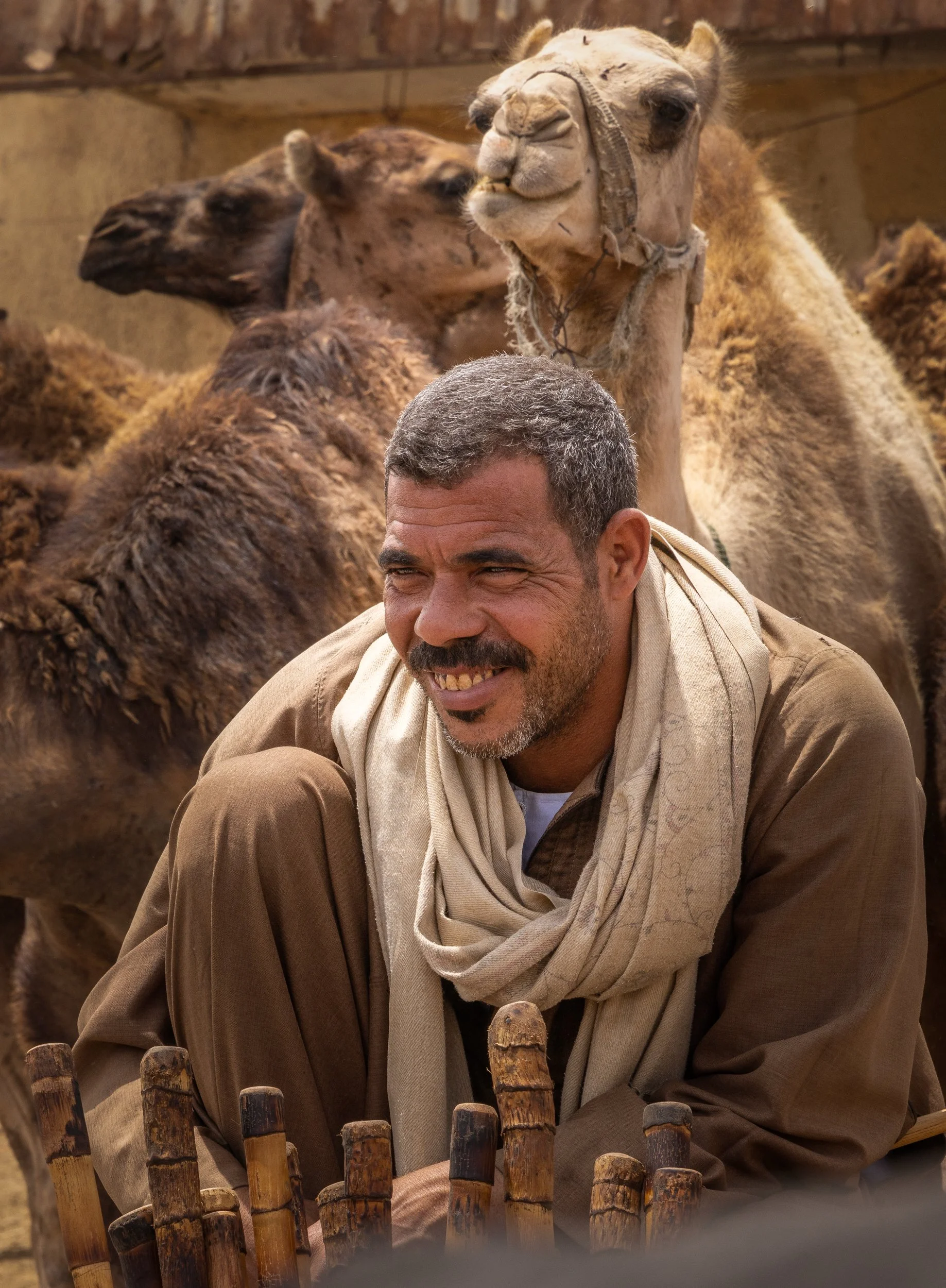
It was heartbreaking to witness and a scene that had me questioning basic human decency and my own also. Why would I want to see this? To inform the world? I made a decision not to haunt myself forever with scenes of brutality. To be clear though - this occurred only when a camel decided it was time to leave the confines of the market - busting a three legged dash through people, trucks, camels, sheep - it was pure chaos and extremely dangerous, so I could see that perhaps there was no other way to contain the mayhem.
Well … I COULD, but the herders possibly had been trading camels the same way for centuries, so why change anything?
I suspected a better use of smaller fenced off areas could help save the animals much of the stress that appeared to be caused by the immediate environment, and it would ensure greater safety. Whilst there are no official stats available for serious injuries or death at the weekly market, I had heard through locals that several people die each year. This is not surprising given the chaotic environment holding thousands of extremely stressed animals, babies separated from mothers running anxiously looking, heavy transport trucks and other items - large machetes, tractors, and the aggressive handling of these beasts, mixed in with the throng of people including very young children; it is easy to see how somebody could fall victim to a camel hoof in the head.
I stood at the entrance with my friends and Mohamed our driver who was clearly wondering why of all places we had chosen to come here. The gatekeepers seized the opportunity to charge us a large entrance fee - being the only westerners idiot enough to visit this hell-hole, they were not going to waste a chance to fleece us of our cash. Right at the time of negotiating, a commotion broke out with much loud shouting, clouds of dust and a thunderous guttural roar, as a large male bull camel broke free from his handler.
Charging about frantically, with one leg bound, it ran wherever it could see a space; kicking up thick clouds of dust obscuring the view. Stick-yielding men chased after the poor thing, yelling; beating it furiously on the head, rump and legs; its body dotted with bleeding welts and old scars from previous beatings. I could only imagine that being sacrificed for Eid might have been a welcome reprieve for him. I prayed for his swift and painless death to put him out of this abject suffering. I could not unsee this debacle and my heart hurt - heavy with what I had witnessed.
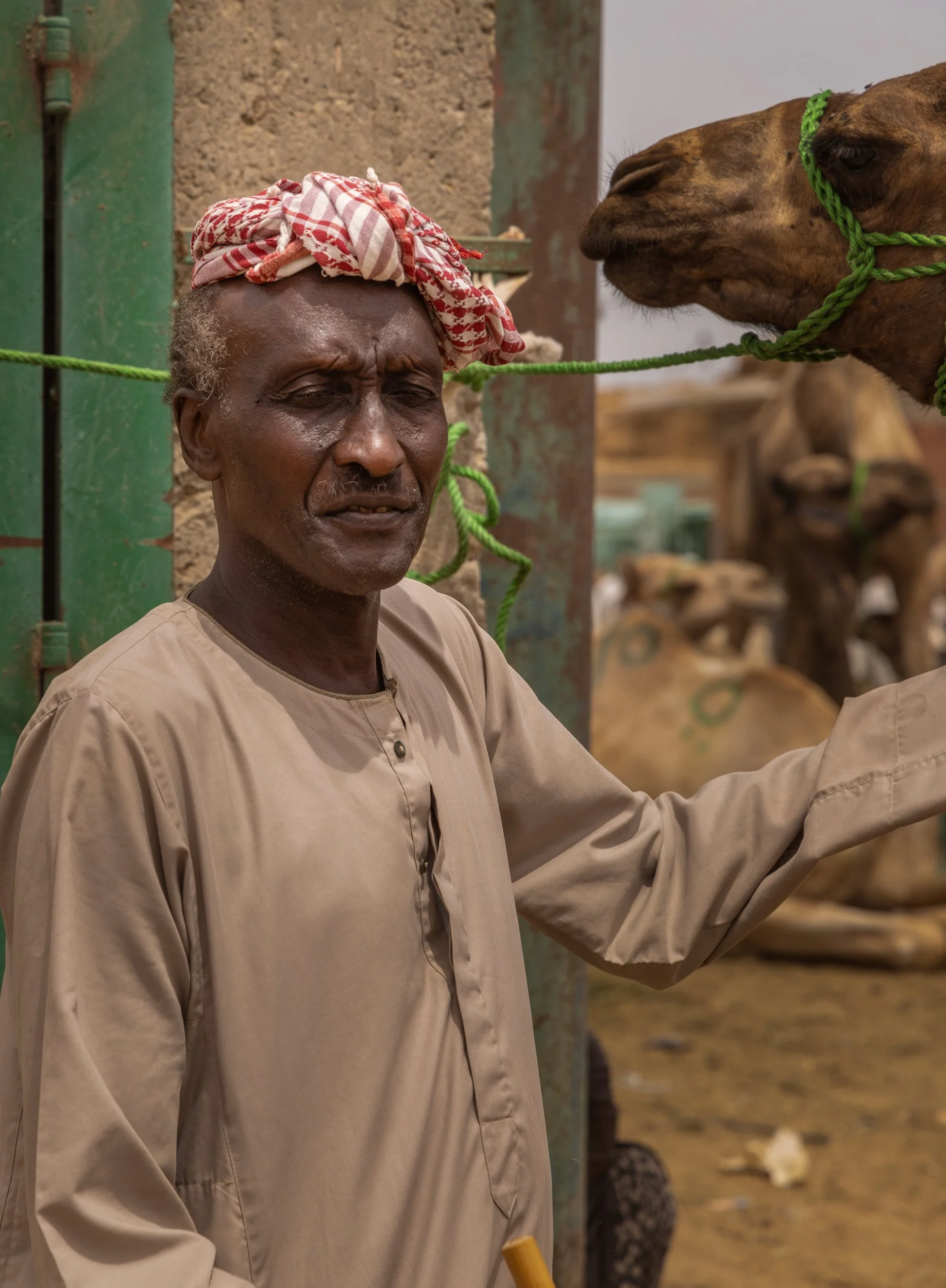
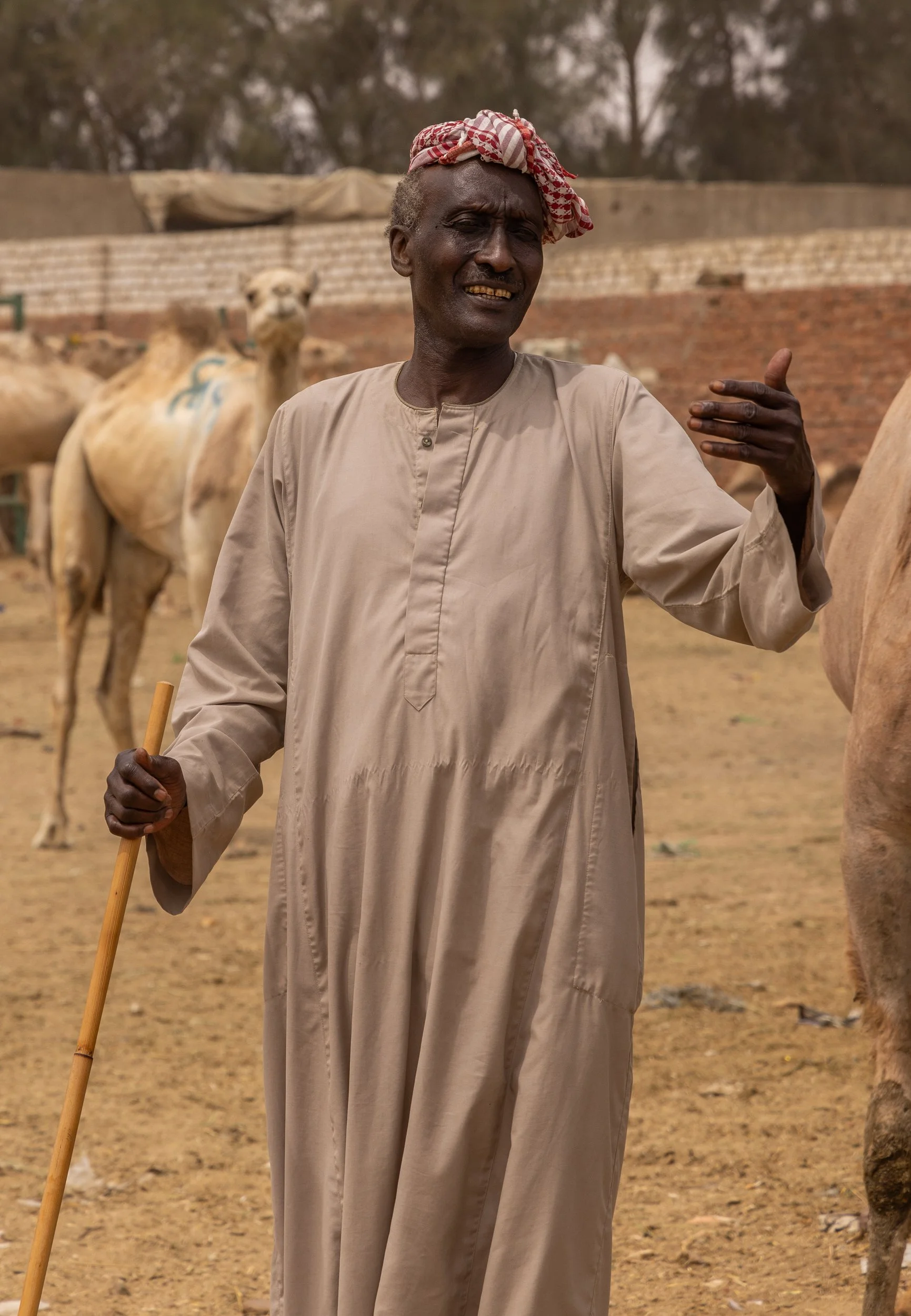
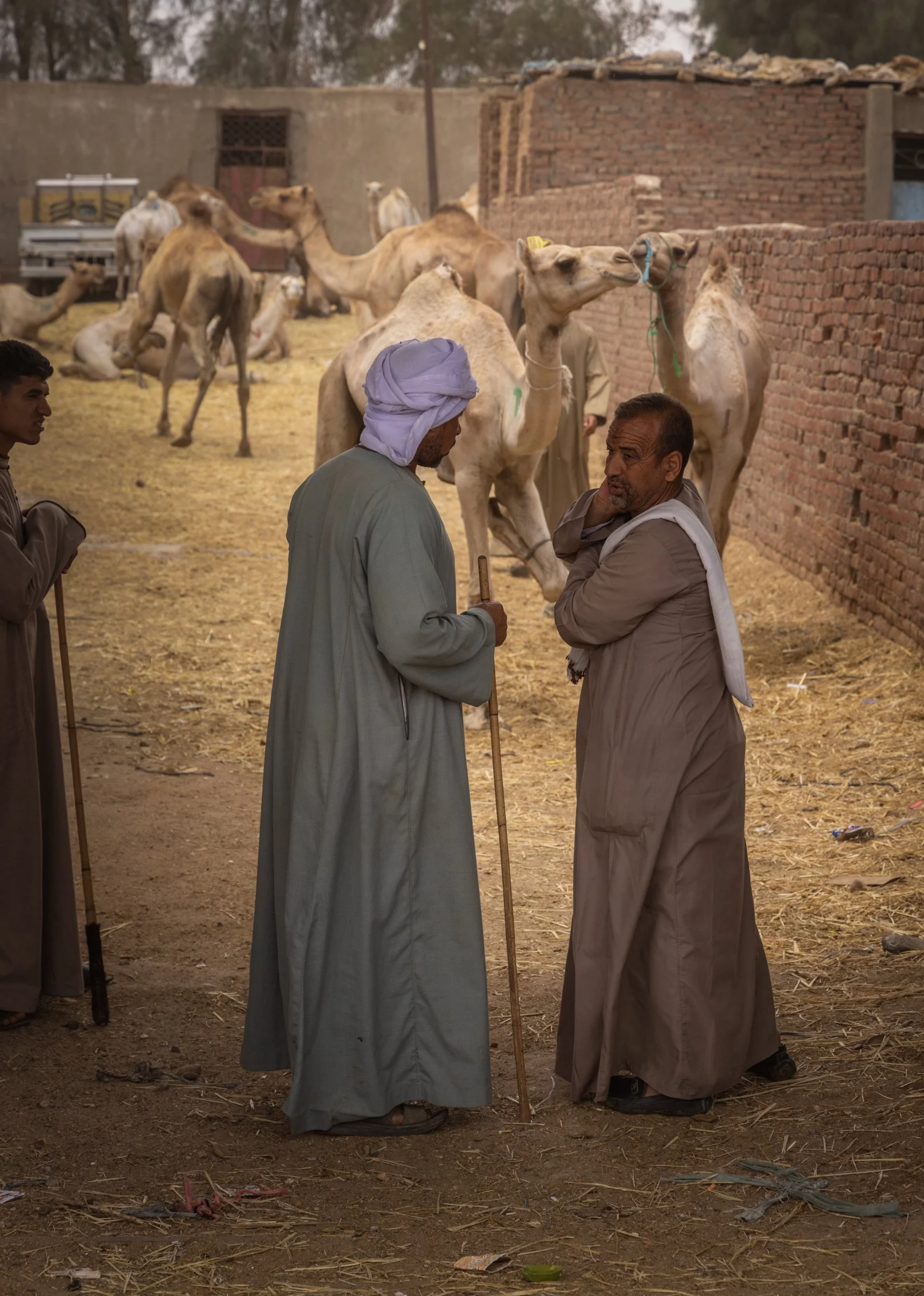
Some research later assured me that animal welfare groups such as PETA and Animals Angels had been monitoring the appalling conditions in this market and have tried tirelessly to bring the conditions to the attention of the Egyptian government, along with attempts to educate the camel farmers themselves.
It is a long slow process to change centuries old customs.
People have to want to change them.
The camel was caught, beaten more for his misdemeanour, and then roped and dragged away by several men back into the market area. We stood at the gate still arguing our entrance fee, while a tall Chinese man asked us if he could walk with us - we all agreed there was safety in numbers here and we needed to keep a watchful eye out for out of control camels. Wandering through the market, robed leather-skinned men eyed us with a mix of suspicion and curiosity. Some asked for photos with us, while others shouted ‘NO PHOTO!!”. Some took the opportunity to ask for a photo and then ask for money for the privilege.
All baksheesh and no biballish here in this place it seems.
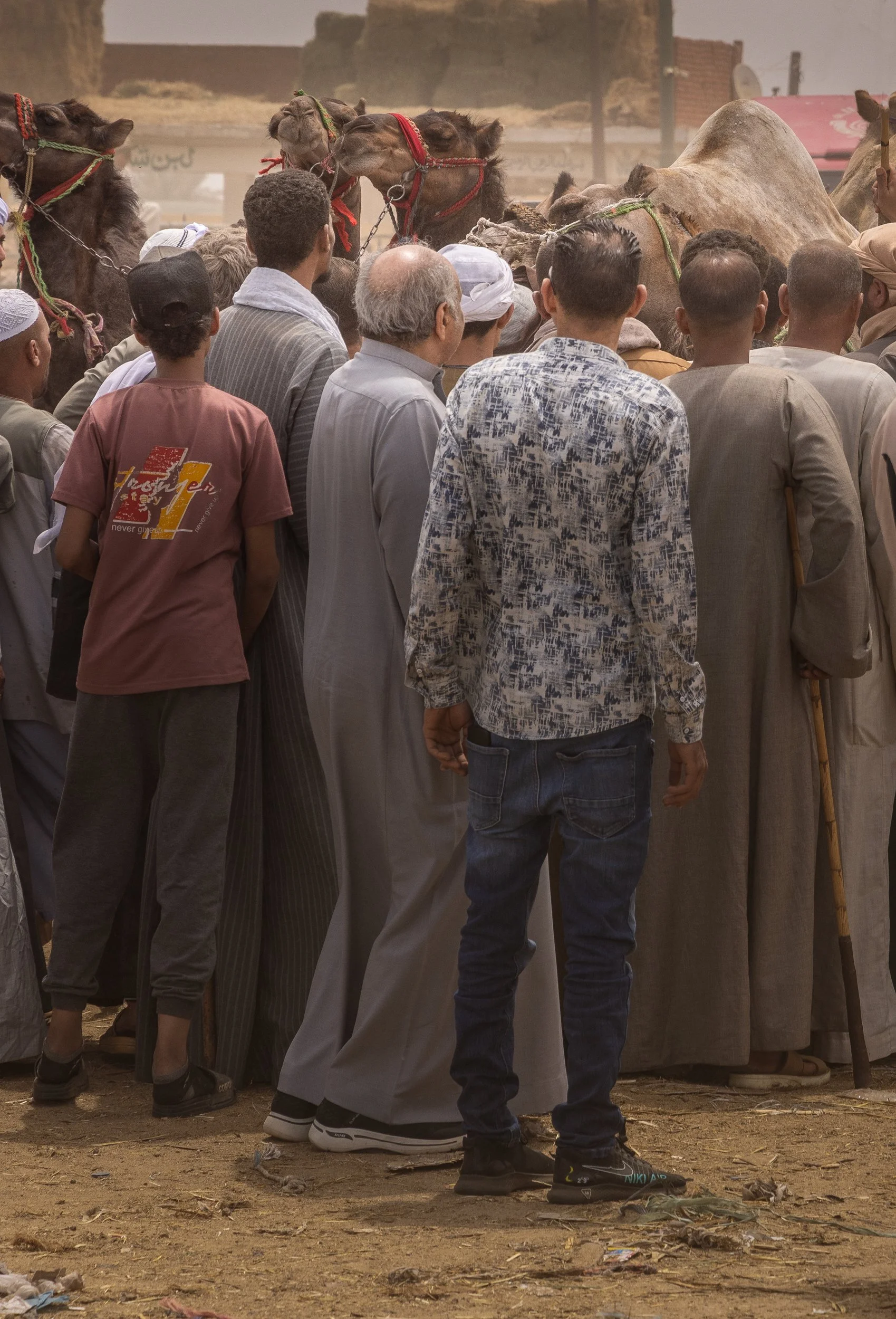
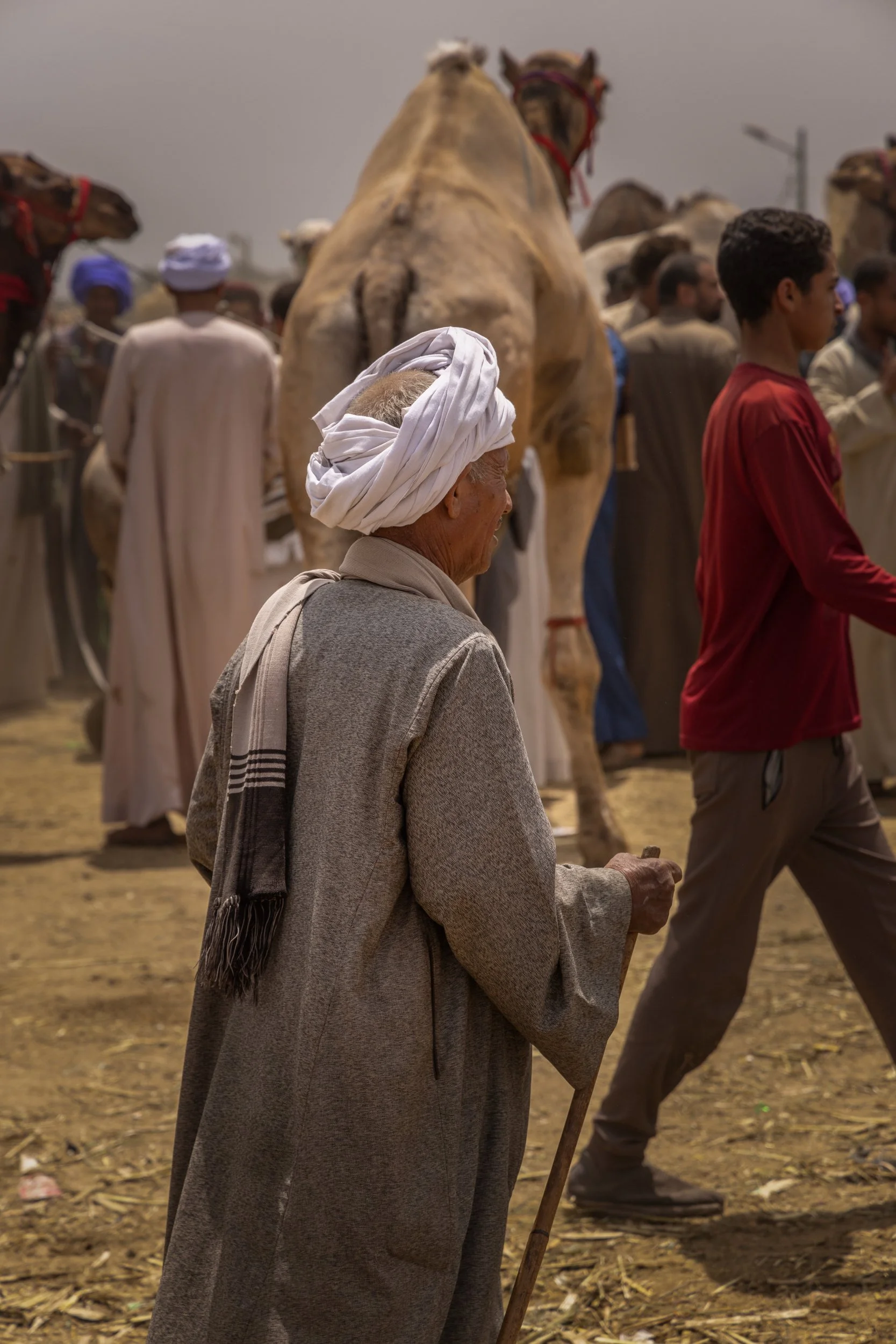
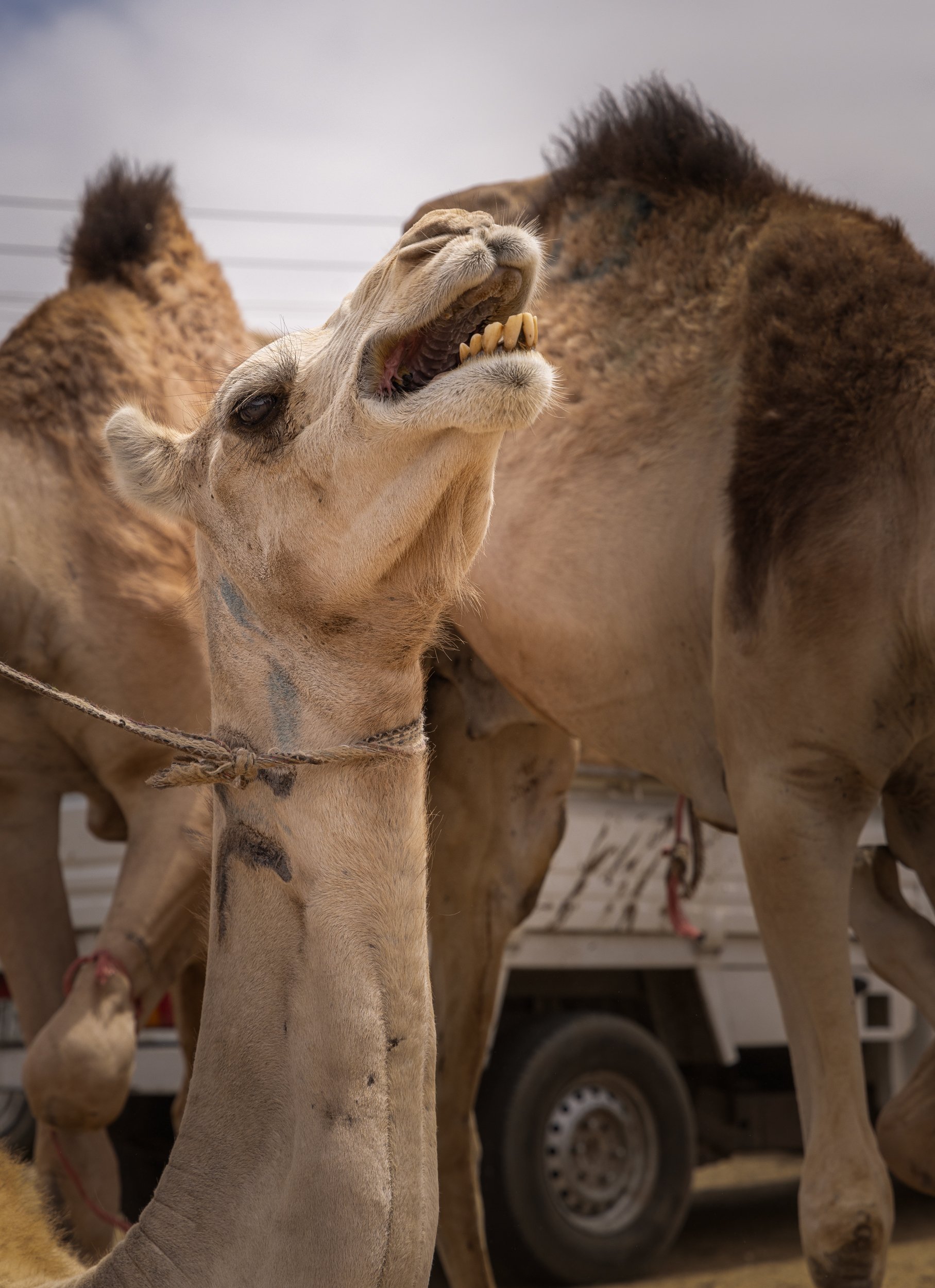
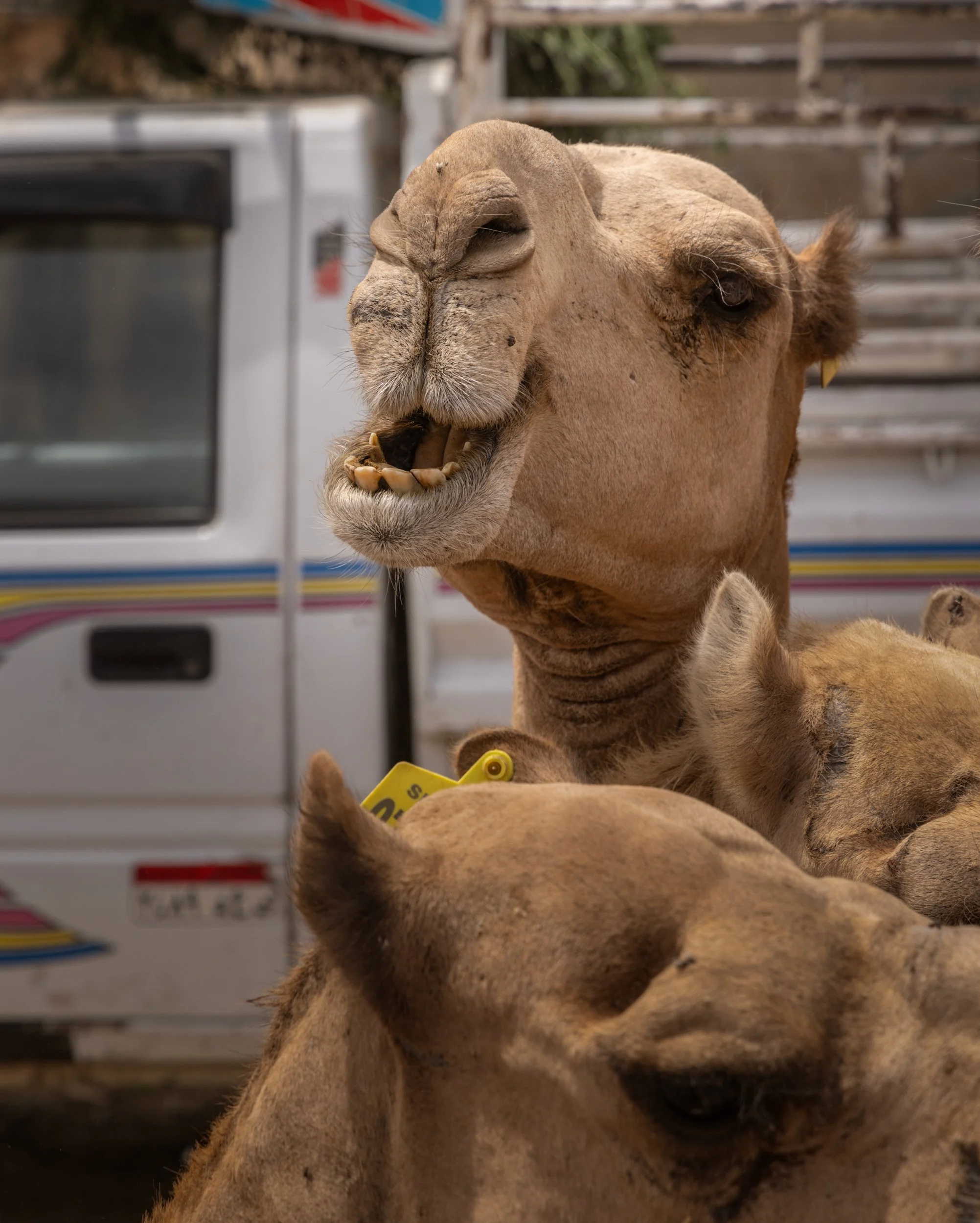
Every now and then a cluster of men would form around a camel brought out to be auctioned off. Voices and arms would raise, and the bartering would begin. Clouds of dust would rise as the camel scuffled about in place. Most camels had their value painted on their skinny flanks, but there was always room for bargaining in Egypt, especially at a market.
The commotion would raise to a crescendo while the said camel was restrained, showing off its best attributes, then the exchange would suddenly take place and the animal would be lead off with its new master.
Along the side of the main market area, vendors were selling various items ranging from freshly squeezed orange (and dust) juice, camel blankets, and one vendor had a large array of very large machetes - no doubt used for the slaughter.
In side alleys, small pockets of sheep and goats were being traded in a more civil orchestration of business. The sheep and goats looked healthy, less stressed and better treated than the camels.
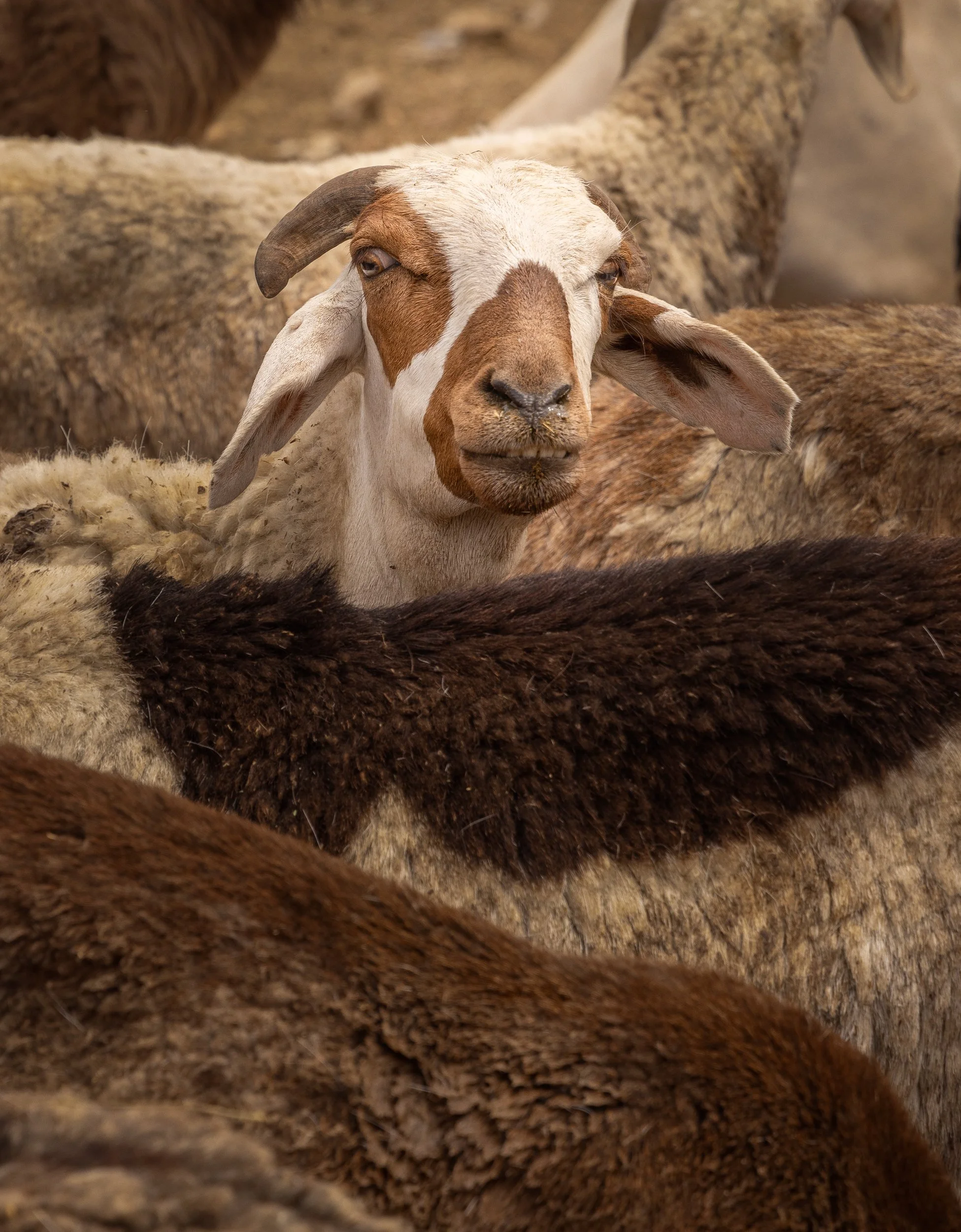
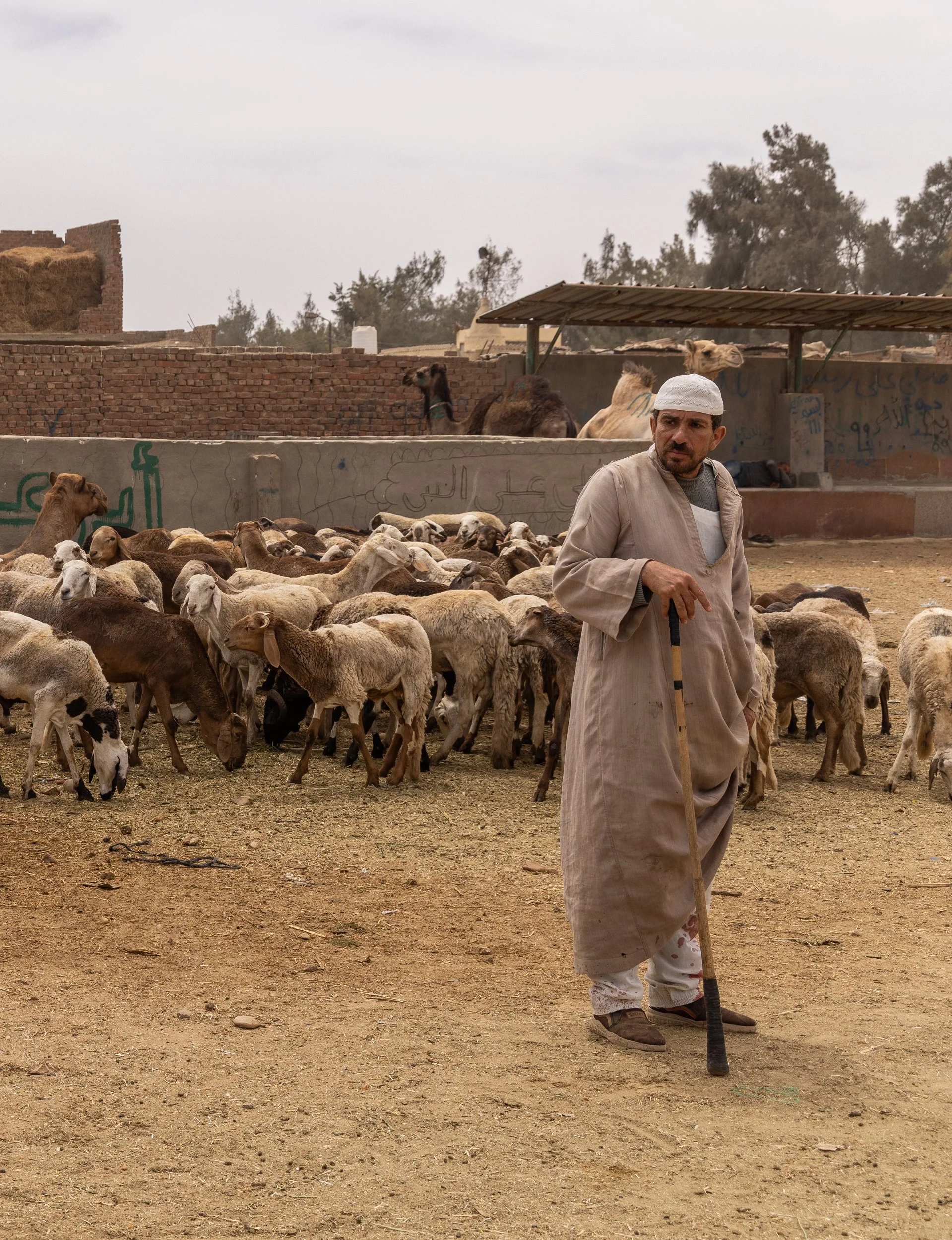
Dark skinned elegant and tall Sudanese men stood around quietly guarding their flocks, occasionally giving some animals a scratch under the chin or behind the ears; waiting for their chance to bring them out for sale. I guess this would happen once the camels were all gone. I also wondered what happened to the camels that did not sell? Did they make the journey south all over again only to have to repeat it a while later?
Men lined the main area, sitting on anything they could find - bales of straw, old tyres, tin cans - some smoking sheesha and watching the spectacle.
Women didn’t belong here - I saw one.
We wandered together as a closely huddled group, our new Chinese friend sticking closely to our sides. Despite being a tall man, and clearly well-travelled, he confessed to feeling scared and nervous about the market. He kept his camera rolling and I wondered what atrocities it would reveal later. The dust was a menace and I opted to put my camera away - Canon was known for being bomb-proof, but the dust was next level, and no amount of crazy was worth taking it out. So I came away with few images, but very vividly etched scenes on my mind and in my heart.
As we walked back to our vehicle, the market drawing to an end, we saw more poor camels being beaten into submission in order to be forcefully loaded onto a tiny flat deck truck. Where they would go was anyones guess - perhaps back to Somalia or Sudan, perhaps to the meat market near Khan el Khalili for Eid purchases. As we exited the village, we saw killing stations. Large buckets with camel legs upside down - hooves in the air - a grim reminder of what the market was there for; carcasses hanging in the unrelenting May sun, amidst flies and dust; eager opportunistic dogs hanging about waiting for a small titbit.
This was a raw, brutal and vividly authentic snapshot of life in Egypt. I had to resign myself to the old mantra of “it is what it is”.
I wondered if this really was any different to what went on behind the fortress like confines of a factory slaughterhouse in a ‘civilised’ country such as New Zealand, or USA. Were the animals treated any different with no one watching? Were they any less stressed?